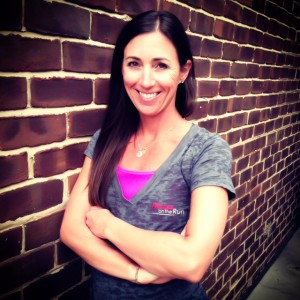

If you have been active in social media for a while, you may have noticed that DPT students are participating in discussions about the current and future state of our profession. I am so encouraged by this passionate group, and really enjoy watching them think critically about important issues. One student that has impressed me for quite some time is Matt De Bole. I had the pleasure of participating in an APTA Roundtable discussion with Matt a few months ago: http://bit.ly/UzgfmM and we got to meet in person recently when Matt was in town over his Spring Break. He agreed to answer some questions I had regarding current DPT student education and the profession in general. He is bright, well spoken, passionate, and a sharp dresser (always in a bow tie). I look forward to seeing his career take off after he graduates. You can find Matt on Twitter at @MattDeBole and you can follow the #DPTstudent chat on Twitter every Wednesday night at 9pm EST.
Interview with Matt DeBole, SPT
1) Give readers a brief bio – where you go to school, when you will graduate, what you did prior to PT school
Having suspicions I would one day become a physical therapist, in 2008, I received my Psychology degree from Georgetown University with a concentration in pre-medicine. After earning a birth in the 2008 Olympic Track and Field Trials in the 1500 meters, I continued to pursue a professional running career for several more years. In the summer of 2011, I hung up the racing spikes and entered into the Doctor of Physical Therapy program at the University of Pittsburgh. I currently serve as class president as well as the 2012-2013 Director of the APTA Student Assembly.
2) What setting would you like to work in upon graduation?
To me, the most intriguing clinical setting I could join after graduation would be an orthopaedic outpatient facility that blends my understanding of athletes with my professional values.
3) What has surprised you the most about PT school?
That’s easy – I never knew I could work this hard. Yes, the curriculum is demanding, but I’ve been most surprised to find a passion for the physical therapy profession that prevents me from going to sleep at night and makes me wake up early in the morning. I’m surprised that I could enjoy and believe in my path so much!
4) Do you feel that your education has prepared you well for your future career?
While it’s been just shy of two years, with one more remaining before graduating, I could not have asked for a better experience at the University of Pittsburgh. Learning from a faculty that includes five Fellows of the APTA allows not just preparation for the NPTE but gives an incredible perspective on the profession in terms of the latest research, involvement opportunities and developing healthcare system. I’m excited to have a year of full-time clinical affiliations ahead of me to fine tune my practice before entering the workforce.
5) If you could improve one aspect of the education process for PTs, what would it be?
The cost of our tuition must come down. On the whole, it’s unrealistic to expect future physical therapists to accrue such incredible debts and not be persuaded to ‘follow the money’ when searching for jobs. Hopefully we can find ways to leverage technology in the classroom to help make this become a reality and allow new grads to focus on their outcomes and not their debts.
6) Have you received any business education in your program which would prepare you to own/operate a PT clinic?
As a part of our Leadership and Personal Development series, the final project involves working in groups tasked with developing strategies to address strategic planning, marketing, quality assurance, policy and procedures, staffing, asset acquisition, budgeting, facility layout, and rules and regulations. Each group has a particular practice setting such as acute care, skilled nursing facility, rehab facility, long-term care facility, nursing home, home health, or outpatient facility. So, while it might not be a formal business class, we are taught by a professor with their MBA and learn to apply business principals to real-world scenarios.
7) Did you find your CI’s to be up to date on research, dedicated to the profession, good mentors?
All of my CIs have been dedicated to the profession and good mentors, which has given me the chance to develop my very basic clinical skills. But, I personally feel as though I’ve experienced the spectrum in terms of their ability to be up to date on the research. Many CIs are clearly updating their practice habits based on the literature and expect their students to be as well. In these situations, there is a mutual respect when research from the CI is given to the student and the student gives the latest from the classroom back to the CI. Other times, I’ve encountered CIs stuck in their practice habits, viewing the latest research as a fad and resort to practice habits they feel most comfortable delivering. They’re resistant to using outcome measures, putting down the ultrasound wand or trying treatments not mentioned in a textbook.
8) What did you find most surprising when you were doing your clinical rotations?
Across the board, I was most surprised by how long it took patients to finally reach a physical therapist for the care they needed, and it seemed to happen for multiple reasons. Sometimes the patient delayed seeking any medical care and decided after months of pain that enough is enough; this speaks to the need to educate the public. Sometimes there was a delay to schedule with physician and an additional delay to schedule with a physical therapist; this speaks to the need to improve access in our system. And sometimes it took visits with multiple physicians to finally find one who would refer to physical therapy; this speaks to the need to educate other health professionals on our scope of practice.
9) What has been your favorite affiliation so far? Least favorite?
My favorite experience has been working in the University of Pittsburgh’s Student Health Service Physical Therapy Clinic alongside three classmates and with the program faculty serving as CIs. My least favorite setting was the skilled nursing facility even though the therapists and patients were both amazing!
10) Were you told in your program that the DPT was the key to gaining autonomy as a healthcare provider? Do you still believe this to be true?
Actually, very early into my time within the program, we were told that the word ‘autonomy’ was incredibly misleading. Yes, the advancement in degree will aid physical therapists in being considered by the public and other health care professionals to be experts who can make autonomous decisions within our scope of practice. However, this autonomy does not mean we can practice in silos, removing the collaborative nature of health care, which as a system provides care for the whole patient. I absolutely believe we need to pursue the DPT to gain this respect.
11) What is your (and your classmates) feeling toward non DPT clinicians (BS, MSPT, MPT)? Do you respect their years of experience as an asset or do you feel that they are inferior because they are not doctorate level practitioners?
Regardless of degree, whether it is a BS, MSPT, MPT or DPT, years of experience are an asset so long as they’re used for personal development. A year of bad experience repeated 25 times over isn’t the same as 25 years of learning, refining, tuning and improving. I can honestly say I have never thought or heard others consider those clinicians without a DPT as inferior. But, seeing the advancement in our profession over the past several decades, it does make me wonder why there is a hesitation of many clinicians to seek the transitional-DPT. Yes, there is the cost and time commitment in addition to possibly not seeing the proportional bump in salary, but shouldn’t all physical therapists be trained in medical screening, health promotion and wellness, pharmacology and diagnostic imagining? What happened to being life-long learners and the importance of public perception?
12) Over the past few years many of my colleagues have reported that they are shocked by the arrogance of DPT students in the clinic. Have you noticed this in your classes? In your rotations? Do you think that this is an accurate perception, or is there some sort of “communication generation gap” going on that experienced therapists are unaware of?
Though I haven’t noticed this shift in student behavior in the clinic over the years since I haven’t been around long enough, I hope that our physical therapy programs are producing more confident, knowledgeable, and progressive students than ever before. We ought to be getting our money’s worth! While I certainly won’t defend arrogance and believe we must continue to be respectful and professional, I will support those students who continually think critically and challenge the status quo. Opinions formed from sound clinical reasoning and biologic plausibility should produce good debates in the clinical setting, as we should all be looking to improve our patient-centered approaches. In this profession, we all must become comfortable with ambiguity and open to other perspectives. Rarely is there an absolute truth in physical therapy.
13) Some DPT students have made comments in social media that they “can’t wait until all the non DPT therapists retire.” I find this to be a rather shocking thing for a student to say. Have you heard other students make comments like this? Do you think they are making comments like this because they had a bad experience on a rotation or do they have a perception of all non DPT therapists as lacking in education and skills?
Yet have I seen or heard other students make comments similar to the one you describe. I would guess anyone making these comments is using the level of degree to reference a style of thinking. ‘Jurassic Park’ physical therapy practices aren’t going to survive in this emerging health care landscape and those who have failed to maintain best practices will either evolve or become extinct.
14) If you could say one thing to experienced therapists about current DPT students, what would you want them to know?
As DPT students, haven’t seen all of the changes you have seen take place in the profession of physical therapy. Some of the tenants of your practice may never have been taught or explained to us. Know that science and technology are rapidly advancing, and we have spent the past three years studying the most current information. Rather than seeing us as your career’s biggest threat, see us as physical therapy’s best hope. Use us as a resource so that we can both share our strengths and better our weaknesses to improve the entire profession.
Thanks to Matt for taking the time to answer my questions! I would love to hear the thoughts of other DPT students as well as thoughts from licensed PT’s on these topics. What have your experiences been?
Ann